


Home

Cancer

Cancer Types

Links

Site Map


Paranasal Tumors  
(Maxillary and Ethmoid Sinus Cancer)  

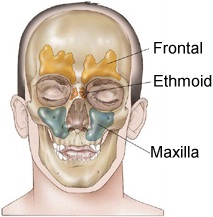
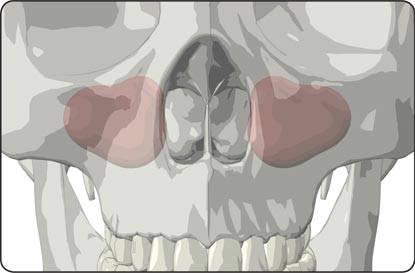
Anatomy here, here, here, here, here, and here.
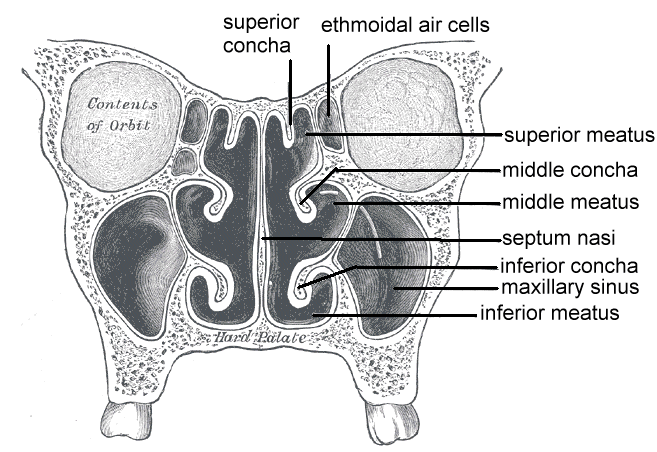
Cross section anatomy: here, here, here, here
Stage and illustrations here|
Stage: one, two, three
MRI of ethmoid cancer here, here and here,
PET scan here

Read the review article , here, here and here

Lymph node risk here

Survival by histology here
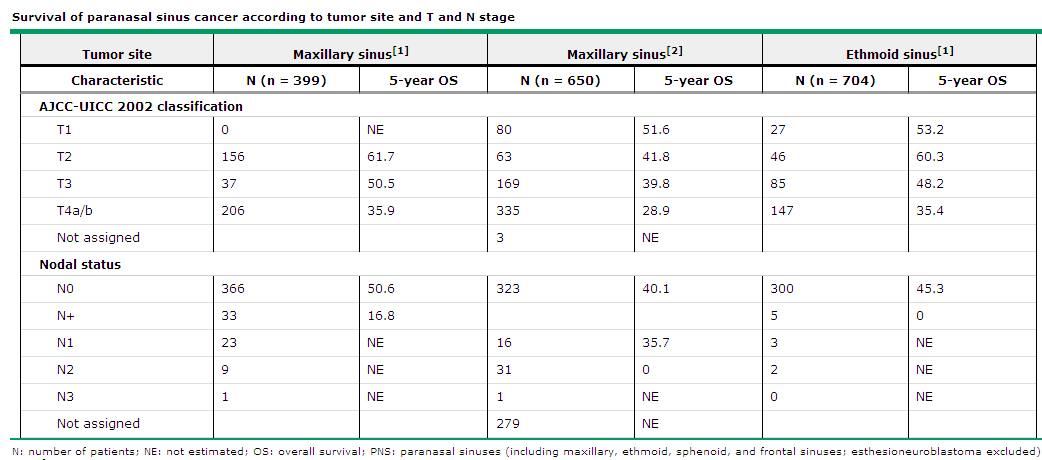
Survival by stage here


Tumors of the paranasal sinuses are rare and often asymptomatic until late in the course of their disease. Although the most common histology for these tumors is squamous cell carcinoma, multiple pathologies have been reported including sarcomas, lymphomas, adenocarcinomas, minor salivary gland tumors, and esthesioneuroblastomas. Locoregional control and incidence of distant metastasis are dependent on both T stage and tumor histology. However, T stage remains the most reliable predictor of .survival and local regional control.

A large single institution retrospective analysis included 149 patients with carcinoma of the maxillary sinus treated with radical surgery and postoperative RT (55 to 60 Gy in six weeks). The five-year actuarial overall and cancer-specific survival rates were 36 and 42 percent, respectively. For patients with stage II, III, or IV disease, survival rates were 75, 36, and 11 percent, respectively. The AJCC reports the following 5 year relative survival rates:  Stage I = 60.4%, Stage II = 50%, Stage III = 45.9% and Stage IV = 31.1%.

Most of these patients are treated with surgery and postOp radiation( see NCCN guidelines page 1 and page 2 and XRT guidelines.) For a review of postOp radiation go here

Carcinoma of paranasal sinuses: long-term outcomes with radiotherapy
Blanco AI, Perez CA / IJROBP 2004;59:51

Malignant tumors of the paranasal sinuses (PNSs) account for approximately 3% of aerodigestive malignancies and are responsible for <1% of cancer deaths. The risk factors are rather unique relative to other primary sites in the aerodigestive tract and include occupational exposure in chrome and gas manufacturing, radium dial exposure, the production of mustard gas, nickel refining, and, of particular relevance to maxillary sinus (MS) cancers, prior exposure to Thorotrast. In an attempt to assess the clinical features and identify significant prognostic factors, treatment outcomes, and complications in squamous cell carcinomas or adenocarcinomas of the PNS, we describe the long-term experience in the management of these tumors at Washington University.The records of 106 patients (72 men and 34 women) with paranasal sinus carcinoma treated with curative intent at Washington University between January 1960 and August 1998 were analyzed. Patient age ranged from 29 to 91 years (median, 64 years). Most tumors originated in the maxillary (76%) or ethmoid (18%) sinus. Most tumors were locally advanced at presentation. All patients underwent radiotherapy (RT), combined with surgery in 65%; 2% received chemotherapy.


Results

Follow-up ranged from 1.7 months to 24 years (median 5 years). The 5-year local tumor control, locoregional tumor control, disease-free survival (DFS), and overall survival rate was 58%, 39%, 33%, and 27%, respectively. A statistically significant improvement in DFS was noted with the addition of surgical resection to RT (35% vs. 29%). Nodal status at presentation emerged as a statistically significant predictor for locoregional tumor control and DFS in multivariate analysis. Distant metastases occurred in 29% of patients. The role of prophylactic lymph node RT has also been examined. A series by Jiang examined the patterns of lymph node recurrence among 73 patients with MS tumors and identified the histologic type as the most important prognostic factor, with squamous cell and undifferentiated tumors having the most potential for nodal relapse at 33% and 50%, respectively. In our series, no statistically significant association was found between the histologic type and nodal relapse. Paulino studied the patterns of nodal recurrence among 42 patients with MS tumors and identified 11 recurrences (26%). In agreement with Jiang, they recommended prophylactic treatment of the ipsilateral neck for those patients at high risk of relapse. Nodal RT was not routinely delivered at our institution; our analysis revealed a 5-year nodal control rate of 71%, which seems consistent with both reports and provides an argument for treatment of the ipsilateral neck in patients with advanced disease.

Neoadjuvant chemotherapy has been advocated for locally advanced PNS carcinoma and has been shown to be beneficial in a select number of patients. A series by Rosen showed an overall and pathologic complete response rate of 83% and 25%, respectively, among 12 patients with Stage III and IV tumors. Our experience with chemotherapy was limited, but we observed only one objective response among 8 treated patients.