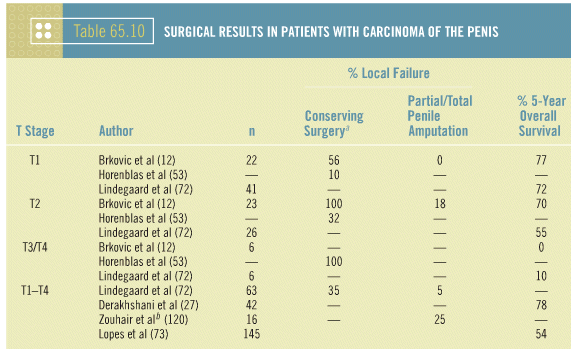
This is an uncommon cancer and is almost always squamous cancer. Most patients are treated with surgery with generally good results (62% 5 year survival for those with immediate node surgery at the same time, versus only 8% for those who require delayed node surgery.)
For all node negative patients the disease free survival is 87% compared to 29% if the cancer has already spread to the nodes. Radiation probably has similar results and may avoid radical surgery and control the nodes as well.
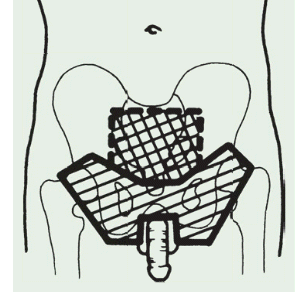
Radiation therapy — Both external beam radiation therapy (RT) and brachytherapy have been used to treat invasive penile cancer SCCs are relatively radioresistant. Thus, high doses of RT are needed to eradicate the tumor and complications are common. Urethral mucositis, edema, and secondary infection are experienced by nearly all patients during treatment. Late complications (telangiectasia, dyschromia, and superficial necrosis, urethral stricture, fistula formation, and meatal stenosis) are also common
There are no randomized trials comparing RT with surgical management. Results from retrospective series suggest that RT (external beam or brachytherapy) may achieve a similar rate of control of the primary tumor compared to standard surgery in selected cases.
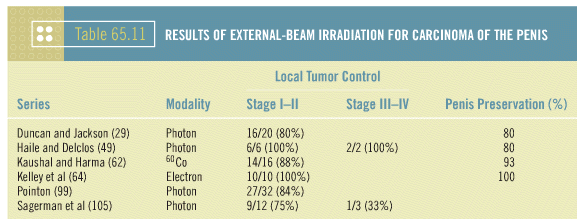
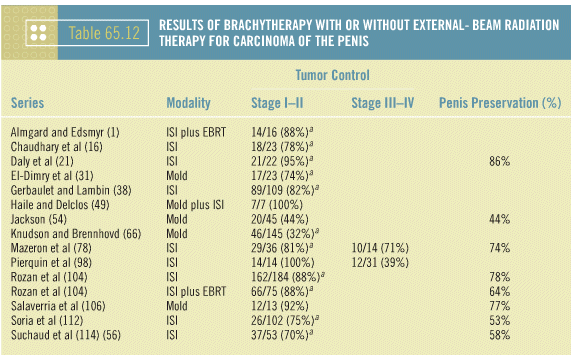
The results with RT are illustrated by three relatively large retrospective series:
- In a series of 184 men treated with brachytherapy alone to a dose of 63 Gy, the local control rate was 86 percent at five years, and penile preservation was achieved in 78 percent of cases.Necrosis occurred in 21 percent of men and stenosis in 45 percent.
- In another series of 144 men with invasive SCC of the glans penis treated with brachytherapy, the 10-year local recurrence-free rate was 80 percent, and the 10-year rate of avoiding surgery because of recurrence or complication was 72 percent.
- In another retrospective series, EBRT (total dose 40 to 60 Gy) was used to treat 155 patients over a 37 year period.. Penile preservation and local control were achieved in 65 percent of patients, and the five-year cancer-specific survival was 86 percent. Complications included necrosis in one patient and stenosis in five
See tables below for results with radiation or surgery.
Some other reference sites: here, here, here, here, here, here,