|
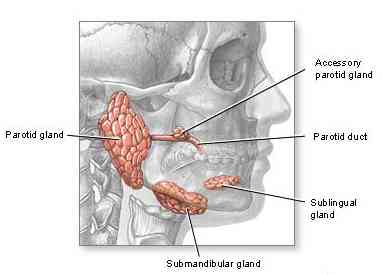
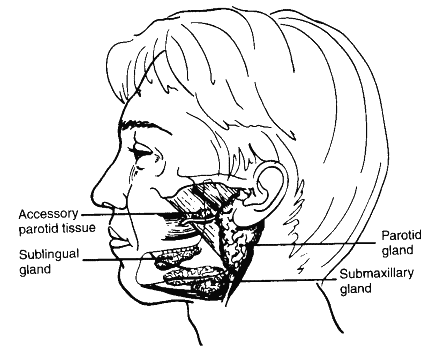
If it is necessary for the radiation fields (or portals) to overlap the saliva glands there is a significant risk of a dry mouth. Every effort is made to limit the radiation dose to the saliva glands but often because of the location of the tumor or involved lymph nodes, much of the saliva gland structures may get treated. Xerostomia (dry mouth) occurs when the salivary glands produce too little saliva. Symptoms of xerostomia include dryness, a sore or burning feeling (especially on the tongue), cracked lips, cuts or cracks at the corners of the mouth, changes in the surface of the tongue, difficulty wearing dentures, and difficulty drinking fluids. Xerostomia can be caused by the effects of radiation therapy on the salivary glands. These changes can occur quickly and usually cannot be reversed, especially if the salivary glands are directly irradiated. Saliva production drops off within 1 week of starting treatment and continues to decrease as treatment continues. The severity of xerostomia depends on the dose of radiation and the number of glands irradiated. The parotid glands (the salivary glands inside the upper back cheeks) are more affected than other salivary glands. Salivary glands that are not irradiated may become more active to offset the loss of saliva from the destroyed glands. Xerostomia changes the ability of the mouth to neutralize acid, clean the teeth and gums, and protect the mouth from infection. Xerostomia can lead to the development of cavities and gum disease. Some useful web sites are noted here. |