lymph_skin_Bcell_image1.jpg (14574 bytes)

B-Cell Lymphoma of the Skin


skin_lymph_b.jpg (1702 bytes)

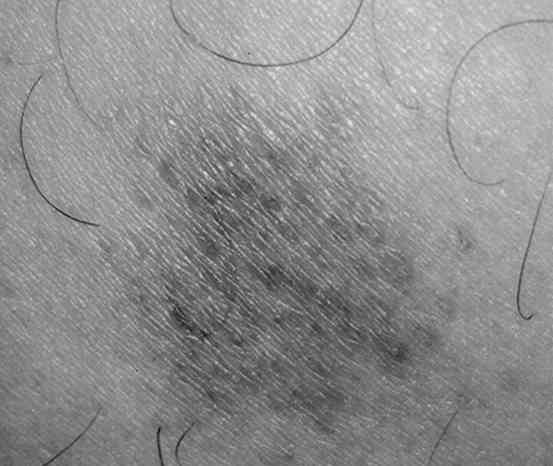
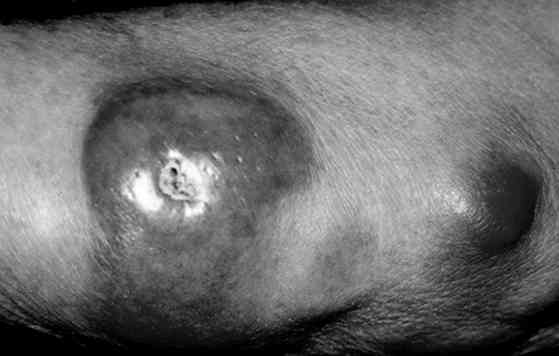
these can present as a nodule (as above) or large nodules (go here) or flat patches or plaques (go here)

Primary Cutaneous B-Cell Lymphoma: Review and Current Concepts


Tomi L. Pandolfino, Richard S. Siegel, Timothy M. Kuzel, Steven T. Rosen, and Joan Guitart,

JCO May 10 2000: 2152-2168

NON-HODGKIN'S LYMPHOMAS constitute a heterogeneous group of malignancies that arise from the lymphoreticular system. Approximately 25% of non-Hodgkin’s lymphomas occur in extranodal sites. The skin is the second most common site of extranodal involvement after the gastrointestinal tract. In the past several decades, substantial knowledge has been gained on the clinical course and treatment of cutaneous T-cell lymphomas (CTCL), such as mycosis fungoides and Sézary syndrome. However, our understanding of primary cutaneous B-cell lymphoma (PCBCL) has lagged behind. Recently, with the advent of improved immunophenotyping and immunogenotyping, increasing numbers of PCBCL are being diagnosed. PCBCL is defined as a B-cell lymphoma originating in the skin. There should be no evidence of extracutaneous disease at presentation and for 6 months after diagnosis, as assessed by adequate staging procedures. Although PCBCLs are similar in clinical appearance and prognosis, PCBCLs can be classified into many different subsets based on histopathologic findings and clinical course. Recent studies have shown that only 6% to 10% of patients with a systemic B-cell lymphoma develop cutaneous involvement. It was not until the 1980s that PCBCL was recognized as a separate entity, with distinct clinical and histologic features, an indolent clinical course, and an excellent prognosis

Although it is known that subpopulations of epidermotropic T cells preferentially home to and recirculate through the skin, there is no consistent information available regarding the existence of a B-cell arm of cutaneous immunosurveillance. Immunoglobulin (Ig) A is known to be present in secretions such as sweat, but there are no known B-cell lymphoid aggregates equivalent to the Peyer’s patch found in the gastrointestinal tract and the Waldeyer’s ring in the respiratory tract.There is speculation that the skin and draining lymph nodes form an integrated system whereby a lymphoproliferative response to an antigenic stimuli is directed toward the skin.

EPIDEMIOLOGY

The overall annual incidence of cutaneous lymphomas is estimated to be 0.5 to 1 per 100,000 people. Approximately 65% of these cutaneous lymphomas are thought to be T-cell in origin, whereas 20% to 25% are thought to originate from B cells. The rest are either extremely rare subsets or currently undefined. Examination of 827 patients in the European Organization for Research and Treatment of Cancer (EORTC) cutaneous lymphoma project group shows that PCBCL is slightly more common in females than males, with a ratio of 2:1.The average age of onset is 59 years, although individual studies report a significant range of ages at presentation from 22 to 92 years.The low-grade subtypes of PCBCL appear far more frequent than the high-grade subtypes.Similar to CTCL, PCBCL may be present for years before a definitive diagnosis is made. However, the time to diagnosis for CTCL is on average 5.1 years, whereas that of PCBCL usually takes 2.1 years.

PROGNOSIS

As a group, PCBCL generally has a better prognosis than CTCL. A retrospective analysis of 772 patients with cutaneous lymphoma (of which 190 had the diagnosis of PCBCL) by the EORTC group shows that the percentage of survival is equal for both T-cell and B-cell lymphomas after 7 years of follow-up (63%). Thereafter, the survival curve flattens for PCBCL (57% after 10 years) as opposed to that of CTCL, which continues to decline (52% after 10 years).Pimpinelli reports an excellent prognosis with a 5-year survival of 96.2% and 10-year survival of 95.5% in their series. Rijlaarsdam reports a slightly lower 5-year survival rate of 89% to 93% in their series of 55 patients. Cutaneous recurrences are fairly common and are observed in 25% to 68% of the patients, but dissemination to internal organs is rare. There is no clear data available on the rate of metastasis of PCBCL, but large case series indicate that anywhere from 3% to 18% of lesions may metastasize to sites other than skin. The most common location of extracutaneous spread included lymph node, bone, and bone marrow. Both extracutaneous and cutaneous recurrences are generally well controlled, with repeated treatment resulting in complete remission.

CLINICAL MANIFESTATIONS

In contrast to CTCL, which progresses slowly from a patch to a plaque to a tumor, PCBCL usually presents as a solitary, circumscribed reddish to violaceous papule, plaque, or nodule.Occasionally, it present as multiple or grouped lesions in a localized skin region. Surrounding erythema, smaller papules, infiltrative plaques, and/or figurate erythematous patches have been reported. Overlying scale or ulceration is rare. Specific subtypes may have a predilection for particular areas of the body, such as the trunk and scalp for follicular center cell (FCC) lymphomas and the extremities for immunocytomas. The main clinical differential diagnosis is reactive lymphoid hyperplasia, which has similar features.

TREATMENT

A variety of different therapeutic modalities have been described in the treatment of PCBCL. However, there are no set guidelines on the preferred mode of treatment. Before the indolent nature of PCBCL was recognized, many patients were probably treated in an unnecessarily aggressive fashion. Currently, the good overall prognosis of PCBCL is recognized, and treatment may be conservative in selected patients. The theory that some PCBCLs are associated with Borrelia burgdorferi infections provides the rationale for the use of antibiotics in selected patients, although this is not recommended as primary treatment by some investigators.

Primary treatment modalities include surgical excision, radiation therapy, polychemotherapy, or combinations of these treatment modalities. In addition, newer therapies such as interferon alfa have recently been introduced in the treatment of PCBCL. The choice of treatment usually depends on the type of PCBCL, the body surface area and location of involvement, and the age and general health condition of the patient. In some cases of poor health or advanced age, given the favorable behavior or PCBCL, watchful waiting may be justified.6 It is important to keep in mind that there are few studies available on the treatment of PCBCL. Most of the treatment recommendations at this time are based on anecdotal reports and retrospective studies. Large case series of patients with PCBCL often did not include detailed information on the specific treatment modality used. It is essential to take into account the shortcomings of retrospective studies when examining these studies.

Surgery
Some anecdotal reports indicate that surgical excision may be adequate in the treatment of PCBCL, but there are no clear studies examining surgical excision alone as the primary treatment of PCBCL. Willemze  noted a high rate of local recurrences with surgical excision and recommended that this mode of treatment be dissuaded. Because of the high recurrence rate of PCBCL, most authors report the combination of surgical excision with radiation therapy or polychemotherapy. Santucci  noted that of 65 cases of PCBCL with follow-up information available, seven were treated only with surgical excision. Five of the seven had complete remission, and only one case was noted to recur within 6 months.

Radiation Therapy
PCBCL is highly responsive to radiotherapy. In 1988, Berti indicated a very favorable response to radiotherapy. All 16 of their patients with follow-up information received radiation therapy as first-line treatment, with complete remission in all cases.It is noteworthy that 12 (75%) of their 16 cases had relapses, mostly confined to the skin. These recurrences were once again treated with radiation therapy with favorable responses.15 Santucci  examined 83 cases of PCBCL. Of the 65 cases with follow-up information, 44 were treated with orthovoltage irradiation up to 40 Gy. The authors note that a 3.0-cm margin of healthy skin was also included in the irradiation site. They found that radiation therapy resulted in complete remission in all 44 cases (100%). However, there was a significant number of relapses (14 of 44 patients), with the median disease-free interval being 20 months (median, 30.5; range, 5 to 100 months). Retreatment of the relapses with radiation therapy seems to have induced a complete remission once again in many cases.

The study by Piccinno  in 1993 was the first detailed study to examine the treatment of PCBCL with radiation therapy. They treated 31 patients with orthovolt radiation therapy, with total doses ranging from 10 to 40 Gy. A healthy skin margin of 0.5 to 1.0 cm was included in the irradiation site. Treatment resulted in complete remissions in all 31 cases (100%). However, 21 of these patients (68%) had relapses with a median disease-free interval of 6 months (range, 1 month to 12 years). The majority of these relapses again resulted in complete remission after retreating with orthovolt radiation. At the time of publishing, 68% of patients (21 of 31) remained alive and free of disease after a follow-up period of 2 to 21 years (mean, 68 months).

Perhaps the only concise study available on treatment of PCBCL is that by Rijlaarsdam. They reported on the treatment and follow-up of 55 patients with FCC lymphoma. Forty of these patients were treated with radiation therapy. This included one treated with orthovoltage equipment, eight treated with photon beam radiation, and 31 with electron beam radiation. Doses ranged from 30 to 40 Gy. In each case, a 2.0-cm margin of healthy skin (excluding surrounding erythema) was included. All 40 (100%) of these patients had complete remission. The relapse rate in these patients was much lower than previously seen in other studies, consisting of only eight of the 40 patients (20%). In addition, half of these patients were found to have extracutaneous spread on recurrence. The median disease-free interval was 13 months (range, 6 to 51 months). No relationship was noted between the relapse rate and the radiation dose, tumor size, thickness, and age at diagnosis. However, it was noted that there was a marked difference in relapse rate between the different anatomic localizations. Four (67%) of six of the cases that recurred had lower extremity involvement. In fact, in this series of 40 patients, the three who died from their disease all had PCBCL involving the lower extremity. The median survival was 65 months (range, 7 to 224 months). The estimated survival excluding the six patients with lower extremity involvement was found to be 96% at 5 years. This decreased to 89% at 5 years when those with leg involvement were included.

In conclusion, there are no clear-cut recommendations for treatment of PCBCL at this time. It must be emphasized that the age and general health of the patient must be taken into consideration, as well as the primary site and extent of disease. Joly noted that patients with disseminated disease involving more than one noncontiguous anatomic site may do worse, and those with higher lactate dehydrogenase levels (which correlated in many cases to tumor burden) may also do poorly. The consensus from these studies and many others indicate that radiation therapy is the treatment of choice for localized disease at presentation or on relapse. Including a margin of at least 2.0 to 3.0 cm of healthy skin and using a total radiation dose of at least 30 Gy seems to result in a lower rate of recurrence. Because it is better tolerated by most patients, it also seems prudent to treat those with poor health or advanced age with radiation therapy. Polychemotherapy should be reserved for involvement of noncontiguous anatomic sites or those with extracutaneous spread. It should also be considered for subtypes with intermediate or poor prognosis, such as patients with large B-cell lymphoma in the lower extremities or those with intravascular B-cell lymphoma. If polychemotherapy is instituted, CHOP seems to have higher rates of complete remission and lower relapses rates than COP does. Therefore, treatment with CHOP is favored over COP. Although there seems to be significant recurrence rates for PCBCL as high as 68%, relapses can be treated with repeat radiation therapy or polychemotherapy. None of these treatment modalities have shown an increase in survival. Therefore, it is important to bear in mind that all treatment is for symptomatic relief. Prospective studies incorporating the International Index are needed in the future to determine which mode of therapy will provide the longest disease-free survival with the least amount of toxicity

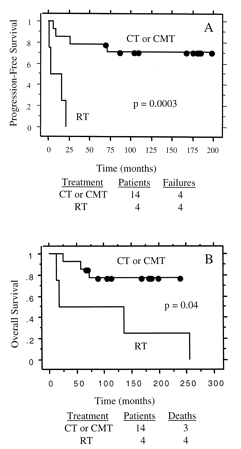
Note that in the paper below from Sarris it appears that patients with diffuse large cell need chemotherapy ( or combined modality therapy CMT rather than just radiation alone, but the other papers state that radiation alone is adequate. The controversy is probably due to how rare thise disease is.)

lymph_skin_sarris.gif (12285 bytes)

Outcome of patients with diffuse large B-cell lymphoma according to the REAL classification (Table 1) after doxorubicin-based combinations (CT) or doxorubicin-based combined-modality therapy (CMT) in 14 patients versus radiotherapy (RT) in 4 patients: (A) PFS; (B) survival.

Primary Cutaneous Non-Hodgkin’s Lymphoma of Ann Arbor Stage I: Preferential Cutaneous Relapses but High Cure Rate With Doxorubicin-Based Therapy

By Andreas H. Sarris, I From the Departments of Lymphoma and Myeloma, Blood and Marrow Transplantation, Hematopathology, Dermatology, and Radiation Oncology, University of Texas M.D. Anderson Cancer Center, Houston, TX. Journal of Clinical Oncology, Vol 19, Issue 2 (January), 2001: 398-405

PURPOSE: Establish frequency, presenting features, response and relapse patterns, and outcome of primary cutaneous non-Hodgkin’s lymphoma (PCNHL).

PATIENTS AND METHODS: Review of untreated patients, older than 16 years, presenting between 1971 and 1993 with cutaneous lymphoma, not mycosis fungoides, and Ann Arbor stage I.

RESULTS: We identified 46 patients, 27 males, with median age of 57 years. Treatment was radiotherapy in 10 patients, doxorubicin-based therapy in 33 patients that was followed by radiotherapy in 25 patients, and other combination with radiotherapy in one patient. The complete response rate was 95%. After a median follow-up of 140 months (range, 61 to 284 months), 18 patients have relapsed, and 14 have died from lymphoma. The first failure was exclusively cutaneous in 50% of relapses. For the 44 treated patients, progression-free survival (PFS; actuarial ± SE) was 61% ± 7% and survival was 58% ± 9% at 12 years. For the 18 patients with diffuse large B-cell lymphoma, after doxorubicin-based regimens, PFS was 71% ± 12% (P = .0003) versus 0% after radiotherapy; survival was 77% ± 12% versus 25% ± 22% (P = 004), respectively. For the nine patients with follicular center-cell lymphoma treated with combined modality, the 12-year PFS was 89% ± 11% and survival 70% ± 18%.

CONCLUSION: PCNHL is rare, and its first relapse is exclusively cutaneous in 50% of patients. Patients with diffuse large B-cell lymphoma are curable with doxorubicin-based regimens but not with radiotherapy. Prospective studies in PCNHL should define the cytogenetics, the basis for cutaneous tropism, the prognosis of histologic subtypes, and the role of radiotherapy.

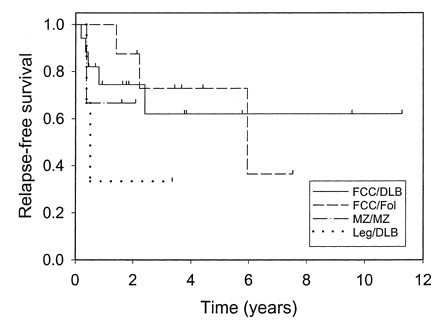
Relapse-free survival by histologic subtype. FCC/DLB, follicle center cell lymphoma by European Organization for Research and Treatment of Cancer (EORTC) but diffuse large B-cell lymphoma by WHO; FCC/Fol, follicle center cell lymphoma by EORTC and follicular lymphoma by WHO; MZ/MZ, marginal zone lymphoma by both EORTC and WHO; Leg/DLB, large B-cell lymphoma of the leg by EORTC and diffuse large B-cell lymphoma by WHO.
Primary cutaneous B-cell lymphoma treated with radiotherapy: a comparison of the European Organization for Research and Treatment of Cancer and the WHO classification systems.

Smith BD  J Clin Oncol. 2004 Feb 15;22(4):634-9.

Department of Therapeutic Radiology, Section of Oncology, Yale University School of Medicine, 333 Cedar St, PO Box 208040, New Haven, CT 06520, USA.

PURPOSE: To determine the relationship between the WHO and European Organization for Research and Treatment of Cancer (EORTC) pathologic classifications for primary cutaneous B-cell lymphoma (CBCL) and the implication of this relationship on initial treatment. PATIENTS AND METHODS: Patients with primary CBCL treated with radiotherapy were identified retrospectively. Initial biopsy specimens were reviewed by two dermatopathologists and classified according to the EORTC and WHO systems. Primary outcomes were recurrence-free and overall survival. y be treated with local radiotherapy alone.
RESULTS: Thirty-four patients were identified; initial biopsy specimens were adequate for classification in 32 patients. Four different composite histopathologic subtypes of lymphoma were identified: 53% (17 of 32) follicle center cell by EORTC and diffuse large B-cell by WHO (FCC/DLB), 25% (eight of 32) follicle center cell by EORTC and follicular by WHO (FCC/Fol), 13% (four of 32) marginal zone by EORTC and WHO (MZ/MZ), and 9% (three of 32) large B-cell of the leg by EORTC and diffuse large B-cell by WHO (Leg/DLB). Five-year relapse-free survival ranged from 62% to 73% for FCC/DLB, FCC/Fol, and MZ/MZ but was 33% for Leg/DLB (P =.6). Five-year overall survival was 100% for FCC/DLB, FCC/Fol, and MZ/MZ but was 67% for Leg/DLB (P =.07). At 5 years, 21% of all patients had developed extracutaneous disease. CONCLUSION: Two-thirds of primary cutaneous FCC lymphomas by EORTC criteria satisfy WHO criteria for DLB lymphoma. Unlike DLB lymphoma presenting in nodal or noncutaneous sites, these lesions are associated with an indolent course and maIn this retrospective study of 34 patients with primary CBCL treated with radiotherapy, 68% of lesions classified as FCC lymphoma by the EORTC system were classified as DLB by the WHO system. This group, abbreviated as FCC/DLB, experienced a 5-year overall survival of 100%, relapse-free survival of 62%, and systemic relapse-free survival of 81%. These results are similar to those observed in the FCC/Fol and MZ/MZ subgroups. In contrast, the small Leg/DLB subgroup experienced worse overall and relapse-free survival, although these differences were not statistically significant given the sample size. These results support the EORTC assertion that, for lesions classified as FCC lymphoma, the presence of DLB morphology does not convey an adverse prognosis. Furthermore, radiotherapy alone results in acceptable control of FCC/DLB lesions, given that systemic relapse and death are uncommon.

The results of this study may help to address a matter of significant controversy regarding the treatment of CBCL. Advocates of the EORTC system have concluded that most CBCLs are indolent lymphomas with a low risk for systemic progression after treatment with radiotherapy. For example, a series of 102 patients with FCC lymphoma treated with radiotherapy alone to a median dose of 24 Gy showed a 5-year overall survival of 97% and 5-year systemic relapse-free survival of 91% . Similar results have been reported in several other smaller retrospective cohorts.

In contrast, advocates of the WHO system have found that DLB is the most common subtype of primary CBCL. Given that nodal and noncutaneous DLB lymphomas are associated with intermediate to aggressive clinical behavior, combined-modality therapy for primary cutaneous DLB lymphoma has been recommended. At present, the only clinical data to support this position is a retrospective study by Sarris  of 19 patients with primary cutaneous DLB lymphoma. Fifteen patients treated with chemotherapy with or without consolidative radiotherapy experienced long-term progression-free survival of 71%. In contrast, all four patients treated with radiotherapy alone developed recurrent disease and three ultimately died.

The results of our study show that a majority of cutaneous FCC lymphomas actually meet morphologic criteria for DLB lymphoma. Nevertheless, they manifest an indolent clinical course, even when treated with radiotherapy alone. These results are consistent with the large number of studies published using the EORTC classification system and are at odds with the study by Sarris . One potential bias in the study by Sarris  that may explain these discordant results is the relationship between year of diagnosis and treatment modality. All patients treated with radiotherapy alone were diagnosed before 1980, whereas all patients who received chemotherapy were diagnosed after 1980. These data are therefore subject to historical bias, particularly because of the evolution of imaging modalities that may have improved staging.

In addition to the clinical data presented in this study, recent molecular data indicate a similarity between FCC/DLB and FCC/Fol. Storz  used a cDNA microarray to compare the gene expression of cutaneous lesions from five FCC/Fol, two FCC/DLB, two systemic follicular lymphomas with skin involvement, and two systemic DLB lymphomas with skin involvement. FCC/Fol, FCC/DLB, and systemic follicular lymphomas shared a similar gene expression profile, whereas the profile of systemic DLB lymphoma was significantly different. These results provide molecular justification for the similar clinical behavior of FCC/DLB and FCC/Fol reported in our study.

As a secondary hypothesis, the relationship between radiotherapy dose and outcome was analyzed. Patients in this series treated with doses >= 40 Gy exhibited a trend toward decreased risk of any recurrence. By selecting a cut point of 36 Gy, patients receiving a low total radiotherapy dose were shown to be at increased risk for local recurrence. Although a relationship between dose and outcome has not been reported previously in CBCL, these findings are compatible with the conventional wisdom that doses from 36 to 40 Gy are appropriate for nodal indolent lymphomas. Given the small sample size, nonuniform distribution of doses, arbitrary selection of dose cut points, and potential biases related to prescription of dose, the relationship between dose and outcome reported in this study should be interpreted with caution. Nevertheless, given the acceptable morbidity associated with 40 Gy delivered to the skin surface, we now routinely use this dose when treating patients with primary CBCL.
Several limitations of this study deserve mention. First, the absolute number of patients, although comparable with other series in the literature, is small. Therefore, conclusions from this study should ideally be verified in larger series. Second, documented clonality was not an entry criterion. As a result, some patients with B-cell pseudolymphoma may have been included, thus biasing the cohort toward a more favorable outcome. However, many other studies have not required clonality as an entry criteria. Furthermore, all patient cases in this study were reviewed by two dermatopathologists with expertise in cutaneous lymphoma and were believed to represent CBCL on histopathologic and cytologic grounds. Finally, the absence of definable clonality does not guarantee a benign diagnosis. For example, nonclonal lesions in this study were not at lower risk for recurrence (33% recurrence rate in the nonclonal group and 41% in the clonal group). Furthermore, half of the recurrences in nonclonal patients were found to harbor an identifiable clonal B-cell population.

In summary, two thirds of primary CBCLs classified as FCC lymphoma by EORTC criteria meet WHO criteria for DLB lymphoma. In contrast to nodal and noncutaneous DLB lymphoma, these lesions are not associated with rapid systemic dissemination and death. As a result, local radiotherapy alone is a reasonable treatment option for many of these patients. Other treatment options may include polychemotherapy alone, combined-modality therapy, and rituximab. For example, Rijlaarsdam  reported a 2-year disease-free survival of 100% in 11 patients with primary cutaneous FCC lymphoma treated with doxorubicin-based polychemotherapy. These authors therefore recommended primary radiation for localized FCC and polychemotherapy for widespread cutaneous disease. At present, no data exist to determine whether or not consolidative radiotherapy will improve outcome in patients who achieve a complete response to polychemotherapy. Finally, anecdotal reports suggest that rituximab monotherapy may produce impressive responses, although the long-term outcome of this approach remains unclear. Clearly, additional prospective trials are required to determine whether or not combined-modality therapy will improve outcome compared with radiotherapy, chemotherapy, or rituximab alone. In the future, stratification of CBCL by gene expression profiling may improve prognostication and treatment selection.

Long-term efficacy, curative potential, and prognostic factors of radiotherapy in primary cutaneous B-cell lymphoma.

Eich HT, Int J Radiat Oncol Biol Phys. 2003 Mar 15;55(4):899-906.

Department of Radiation Oncology, University of Cologne, Cologne, Germany. Hans-Theodor.Eich@medizin.uni-Koeln.de

PURPOSE: Primary cutaneous B-cell lymphomas (PCBCL) are rare and constitute approximately 5-10% of all cutaneous lymphomas. In the literature, conflicting data exist on the optimal treatment modality regarding the efficacy and the relapse rate after radiotherapy (RT) or polychemotherapy. To evaluate the efficacy of RT, patient data from two centers were analyzed and compared with recent reports in the literature. MATERIALS AND METHODS: Between April 1984 and June 2001, 35 patients with PCBCL, 17 men and 18 women ages 27-86 years, were treated with RT alone (29/35 patients) or postoperative RT (6/35 patients). According to the European Organization for Research and Treatment of Cancer classification for PCBCL, this study group included 21 patients (60%) with primary cutaneous follicle center-cell lymphoma, 7 (20%) with primary cutaneous immunocytoma, 4 (11%) with primary cutaneous large B-cell lymphoma (PCLBCL) of the leg, and 3 (9%) provisional types. RESULTS: A total of 34/35 patients achieved an initial complete response after RT. In one additional patient, RT was interrupted after 16 Gy because of fulminant pneumonia. A total of 11/35 (31%) patients developed cutaneous relapse after a median of 11 months. Three patients developed an in-field response and 8 patients an out-field relapse. After a median follow-up of 52 months, 27/35 patients are alive, whereas 8/35 patients died (three deaths resulting from PCBCL and five unrelated to PCBCL). The 5-year overall survival rate was 75% (95% CI: 55-95%). The 5-year relapse-free survival was 50% (95% CI: 32-68%). Univariate and multivariate analysis revealed disseminated primary lesions in at least two noncontiguous anatomic sites and the histologic subtype PCLBCL as unfavorable prognostic factors. CONCLUSIONS: RT of all visible skin lesions is an effective treatment for localized PCBCL. In patients with cutaneous relapses, RT is an effective treatment option as well.

Radiotherapy in the management of cutaneous B-cell lymphoma. Our experience in 25 cases.

Kirova YM,   Radiother Oncol. 1999 Jul;52(1):15-8.

Department of Cancerology, Henri Mondor University Hospital, Creteil, France.

PURPOSE: To report our results in the treatment with radiation therapy of 25 patients affected by B-cell lymphoma with initial cutaneous presentation. MATERIALS AND METHODS: From October 1978 to June 1997, we have treated 25 patients with cutaneous B-cell lymphoma (CBCL) by cutaneous irradiation. There were 17 males and eight females, aged from 23 to 89 years (median age 50 years). The mean follow-up time for the series was 3.9 years (range from 0.2 to 15 years) from the completion of radiation therapy. All patients were staged as follows: in group 1, single lesion; group 2, multiple lesions; group 3, disseminated lesions. There were six (24%) patients in group 1, 15 (60%) patients in group 2, and four (16%) in group 3. There were nine patients with head and neck lesions, 11 patients with trunk lesions, and five patients with leg lesions. Thirteen patients (52%) had previously received chemotherapy for CBCL. Extended field irradiation was used to treat six patients (24%). Localized field irradiation (LFI) was performed for the other 19 patients (76%). RESULTS: The overall survival rate at 5 years was 73%. The complete response (CR) to the treatment for our series was 92%. The length of complete remission ranged from 2 to 180 months. There were three patients (8%) who obtained partial response (PR). Disease-free survival (DFS) at 1 year was 91% and at 5 years was 75%. Radiotherapy was generally well tolerated. CONCLUSIONS: Localized field irradiation is an effective treatment for some localized forms of primary cutaneous B-cell lymphoma and can obtain prolonged remissions. The patients with wide-spread skin involvement are usually candidates for extended field irradiation and/or chemotherapy. For the advanced stages of cutaneous B-cell lymphoma, where the chemotherapy is the treatment of choice, some good palliation can be achieved using local field irradiation.