|
Mortality Results from a
Randomized Prostate-Cancer Screening Trial
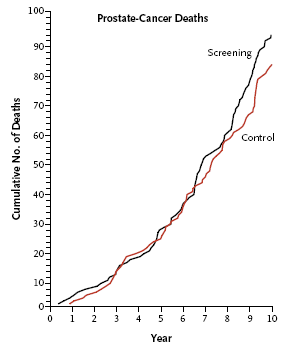
Background The effect of screening with prostate-specific–antigen (PSA) testing and digital rectal examination on the rate of death from prostate cancer is unknown. This is the first report from the Prostate, Lung, Colorectal, and Ovarian (PLCO) Cancer Screening Trial on prostate-cancer mortality. Methods From 1993 through 2001, we randomly assigned 76,693 men at 10 U.S. study centers to receive either annual screening (38,343 subjects) or usual care as the control (38,350 subjects). Men in the screening group were offered annual PSA testing for 6 years and digital rectal examination for 4 years. The subjects and health care providers received the results and decided on the type of follow-up evaluation. Usual care sometimes included screening, as some organizations have recommended. The numbers of all cancers and deaths and causes of death were ascertained. Results In the screening group, rates of compliance were 85% for PSA testing and 86% for digital rectal examination. Rates of screening in the control group increased from 40% in the first year to 52% in the sixth year for PSA testing and ranged from 41 to 46% for digital rectal examination. After 7 years of follow-up, the incidence of prostate cancer per 10,000 person-years was 116 (2820 cancers) in the screening group and 95 (2322 cancers) in the control group (rate ratio, 1.22; 95% confidence interval [CI], 1.16 to 1.29). The incidence of death per 10,000 person-years was 2.0 (50 deaths) in the screening group and 1.7 (44 deaths) in the control group (rate ratio, 1.13; 95% CI, 0.75 to 1.70). The data at 10 years were 67% complete and consistent with these overall findings. Conclusions After 7 to 10 years of follow-up, the rate of death from prostate cancer was very low and did not differ significantly between the two study groups. |
||
|
||
| The
benefit of screening for prostate cancer with serum
prostate-specific–antigen (PSA) testing, digital rectal
examination, or any other screening test is unknown.
There has been no comprehensive assessment of the
trade-offs between benefits and risks. Despite these
uncertainties, PSA screening has been adopted by many patients
and physicians in the United States and other countries. The
use of PSA testing as a screening tool has increased
dramatically in the United States since 1988.Numerous
observational studies have reported conflicting findings
regarding the benefit of screening. As a result, the
screening recommendations of various organizations
differ. The American Urological Association and the
American Cancer Society recommend offering annual PSA testing
and digital rectal examination beginning at the age of 50
years to men with a normal risk of prostate cancer and
beginning at an earlier age to men at high risk. The
National Comprehensive Cancer Network recommends a
risk-based screening algorithm, including family history,
race, and age. In contrast, the U.S. Preventive Services
Task Force recently concluded that there was insufficient
evidence in men under the age of 75 years to assess the
balance between benefits and side effects associated with
screening, and the panel recommended against screening
men over the age of 75 years. Evidence from randomized trials would be of great assistance in making decisions about whether to pursue prostate-cancer screening. One randomized trial of PSA-based screening reported a benefit, but the results have been generally discounted because of serious methodologic concerns, including a lack of intention-to-screen analysis.Two ongoing randomized, controlled trials of prostate-cancer screening are being conducted to determine the effect of screening on prostate-cancer mortality: the Prostate, Lung, Colorectal, and Ovarian (PLCO) Cancer Screening Trial in the United States and the European Randomized Study of Screening for Prostate Cancer (ERSPC). In the United Kingdom, another ongoing trial, the Comparison Arm for the PROTECT (Prostate Testing for Cancer and Treatment) study (CAP), combines the assessment of screening and treatment. The prostate component of the PLCO trial was designed to determine the effect of annual PSA testing and digital rectal examination on mortality from prostate cancer. Previous reports have described the results of the baseline round and three later rounds of screening and the characteristics of men undergoing biopsy in the intervention group. This report provides information on prostate-cancer incidence, staging, and mortality in both study groups during the first 7 to 10 years of the study. We are reporting here for the first time on the PLCO trial with respect to prostate-cancer mortality. At 7 years, screening was associated with a relative increase of 22% in the rate of prostate-cancer diagnosis, as compared with the control group. This increase occurred even though the rate of compliance in screening (85%) was slightly below the level we anticipated in the study design (90%) and there was more-than-expected screening in the control group. Screening was associated with no reduction in prostate-cancer mortality during the first 7 years of the trial (rate ratio, 1.13), with similar results through 10 years, at which time 67% of the data were complete. However, the confidence intervals around these estimates are wide. The results at 7 years were consistent with a reduction in mortality of up to 25% or an increase in mortality of up to 70%; at 10 years, those rates were 17% and 50%, respectively. There was little difference between the two study groups in the number of deaths from other causes. However, among men with prostate cancer at 10 years, 312 in the screening group and 225 in the control group died from causes other than prostate cancer, and the excess in the screening group was possibly associated with overdiagnosis of prostate cancer. There are several possible explanations for the lack of a reduction in mortality so far in this trial. First, annual screening with the PSA test using the standard U.S. threshold of 4 ng per milliliter and digital rectal examination to trigger diagnostic evaluation may not be effective. In the ERSPC trial, a PSA cutoff level of 3 ng per milliliter was used, with potentially increased sensitivity but reduced specificity. In our trial, a lower cutoff level might have resulted in the diagnosis of more prostate cancers earlier by screening. It has been shown that cancers that are detected by PSA screening at a level of less than 4 ng per milliliter have a favorable prognosis. Since increased detection of more of such good-prognosis tumors might have increased the rate of overdiagnosis, such a change probably would have had little or no effect on the rate of death from prostate cancer. Second, the level of screening in the control group could have been substantial enough to dilute any modest effect of annual screening in the screening group. Although the estimated rate of screening in the control group was higher than the original design estimate of 20%, it was similar to the 38% level anticipated in the protocol revision in 1998 To be included in our definition of "PSA contamination," a subject in the control group needed to have had a PSA test within the past year as part of a routine physical examination. It was thought that such a situation would most closely represent the experience of PSA screening among compliant men in the screening group. However, this definition could be overly restrictive, since PSA testing that occurred outside these measures could still have had an effect on prostate-cancer incidence and mortality in the control group. Nonetheless, in the early years of the study, the level of testing in the screening group was substantially higher than that in the control group, and although the difference lessened later, testing levels remained distinctly higher in the screening group. The screening that occurred in the control group was not enough to eliminate the expected effects of annual screening — such as earlier diagnosis and a persistent excess of cases, largely due to overdiagnosis — in the screening group. Third, approximately 44% of the men in each study group had undergone one or more PSA tests at baseline, which would have eliminated some cancers detectable on screening from the randomized population, especially in health-conscious men (who tend to be screened more often, a form of selection bias); thus, the cumulative death rate from prostate cancer at 10 years in the two groups combined was 25% lower in those who had undergone two or more PSA tests at baseline than in those who had not been tested. Fourth, and potentially most important, improvement in therapy for prostate cancer during the course of the trial probably resulted in fewer prostate-cancer deaths in the two study groups, which blunted any potential benefits of screening.It is important to note that our policy of not mandating specific therapies after cancer detection on screening resulted in substantial similarities in treatment according to tumor stage between the two study groups. Finally, the follow-up may not yet be long enough for benefit from the earlier detection of an increased number of prostate cancers in the screening group to emerge. Data are accruing on the natural history of screen-detected prostate cancer. Thus, a report from the Rotterdam component of the ERSPC trial suggests a lead time of 12.3 years at the age of 55 years and 6 years at the age of 75 years, with estimated overdiagnosis rates of 27% and 56%, respectively. Wider application of improvements in prostate-cancer treatment is probably at least in part responsible for declining death rates from prostate cancer in most countries. For example, if a patient's life is prolonged by the use of hormone therapy, the opportunities for competing causes of death increase, especially among older men. Computations of lead time provide little information on prognosis, except to the extent that patients with long lead times are likely to have a better prognosis than those with short lead times. In our study, the average lead time achieved by increased early diagnosis through screening was approximately 2 years. At 7 years, 73% of prostate cancers had been screen-detected in the screening group. In addition, the possibly emerging reduction in the incidence of tumors with a Gleason score of 8 to 10 in the screening group might portend a future reduction in mortality. However, we now know that prostate-cancer screening provided no reduction in death rates at 7 years and that no indication of a benefit appeared with 67% of the subjects having completed 10 years of follow-up. Thus, our results support the validity of the recent recommendations of the U.S. Preventive Services Task Force, especially against screening all men over the age of 75 years. Risks incurred by screening, diagnosis, and resulting treatment of prostate cancer are both substantial and well documented in the literature. To the extent that overdiagnosis occurs with prostate-cancer screening, many of these risks occur in men in whom prostate cancer would not have been detected in their lifetime had it not been for screening. The effect of screening on quality of life is a subject of an ongoing substudy and should be completed within the next several years. Follow-up in the PLCO trial is planned to continue until all subjects reach at least 13 years. A final report will be presented once the planned duration of follow-up is completed. |