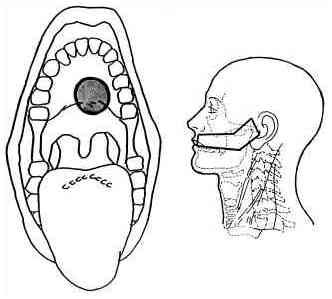
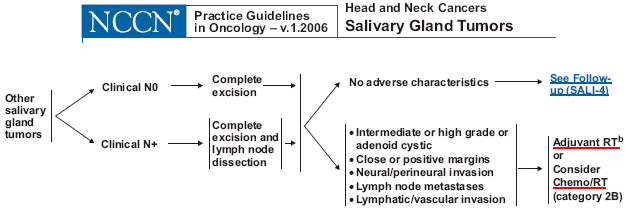
see recent literature on the use of radiation
for minor salivary gland cancers
Management of adenoid cystic carcinoma
of minor salivary glands.
Triantafillidou K
J Oral Maxillofac Surg. 2006 Jul;64(7):1114-20.
PURPOSE: Adenoid cystic carcinoma (ACC) is a
rare malignant tumor originating from the salivary glands. The
characteristic clinicopathologic features of this tumor are perineural
spread, local recurrences, and distant metastases. Radical surgery combined
with radiotherapy, as mentioned in the literature, is the best method of
treatment. This clinical review article is intended to analyze the outcome
of management of a group of 22 ACC patients, who were treated in our clinic.
METHODS: Between 1985 and 2000, 22 patients with ACC of minor salivary
glands were treated in the Clinic of Oral and Maxillofacial Surgery of the
"G. Papanikolaou" General Hospital, in Thessaloniki. The age range was 22 to
87 years. The distribution of the primary sites was buccal mucosa (3), floor
of the mouth (1), hard palate (3), soft palate (2), junction of hard and
soft palate (7), and hard or soft palate with spread in the paranasal sinus
etc (6). All the patients were treated radically with surgery. The surgery
was combined with radiotherapy in 17 patients. A total dose of 60 Gy in a
30- to 40-day period was given, using conventional 2 Gy fractions per day.
Immunohistochemical assay of the expression of the Ki-67 antigen was
performed on a subset of 15 cases. RESULTS: The mean follow-up range was 4
to 14 years. From the 22 patients, 15 (68.18%) were alive for more than 5
years and 6 (27.7%) had died from the disease. Eight patients were free of
the disease for more than 5 years (ranging from 7 to 14), 4 patients were
free of the disease for 5 years, and 3 patients were free of the disease for
4 years. One patient lived more than 10 years and died from another cause.
Local recurrence was developed in 2 patients. One recurrence occurred within
the first year after the treatment and the second local recurrence occurred
13 years after the initial treatment. Lymph node metastases occurred in 2
patients, 3 years and 7 years after completing the treatment. Distant
metastases (lung) occurred in 2 patients, 2 years and 6 years after
completing the treatment. The Mann-Whitney statistical analysis was used for
comparing the Ki-67 values in correlation with prognosis and location of
ACCs. The Ki-67 value was significantly higher in tumors from patients with
treatment failure than in nonfailures (P < .001). The Ki-67 expression was
also higher in large tumors characterized by wide topical spread (P < .005).
CONCLUSIONS: The most proper method
of treatment for ACC seems to be radical resection combined with
radiotherapy. The treatment failure is associated with positive
margins of the excised surgical specimen and named nerve involvement. The
immunohistochemical study of Ki-67 e
Int J Radiat Oncol Biol Phys 2001
Nov 15;51(4):952-8
Postoperative radiotherapy for malignant tumors of the submandibular gland.
Storey MR, Garden AS, Morrison WH, Eicher SA, Schechter NR, Ang KK
Department of Radiation Oncology, The University of Texas, M.D. Anderson Cancer Center,
Houston, TX, USA
Cancers originating from the submandibular gland are uncommon and can represent a broad
spectrum of disease. They represent approximately 15–20% of malignant tumors of major
salivary glands. Surgery is generally accepted as the primary treatment for submandibular
gland cancers. However, the locoregional control rate is less than 50% in patients with
adverse features if no adjuvant treatment is delivered. These features include
extraglandular extension, positive margin, locally recurrent disease after a previous
surgical procedure, perineural invasion, and the presence of advanced nodal disease. At
the University of Texas M. D. Anderson Cancer Center (MDACC), we have selectively
irradiated patients with high-risk features.This retrospective study assessed the outcome
and patterns of failure for patients with malignant submandibular
tumors treated with surgery and postoperative radiation.Methods and Materials:
Between 1965 and 1995, 83 patients aged 11-83 years old received postoperative
radiotherapy after resection of submandibular gland carcinomas. The most common radiation
technique was an appositional field to the submandibular gland bed using electrons either
alone or mixed with photons. Primary tumor bed doses ranged from
50 to 69 Gy (median, 60 Gy). Regional lymph nodes
(ipsilateral Levels I-IV) were irradiated in 66 patients to a median dose of 50 Gy.
Follow-up time ranged from 5 to 321 months (median, 82 months).Results: Actuarial
locoregional control rates were 90%, 88%, and 88% at 2, 5, and 10 years, respectively. The
corresponding disease-free survival rates were 76%, 60%, and 53%, because 27 of 74
patients (36%) who attained locoregional control developed distant metastases.
Adenocarcinoma, high-grade histology, and treatment during the earlier years of the study
were associated with worse locoregional control and disease-free survival. The median
survival times for patients with and without locoregional control were 183 months and 19
months, respectively. Actuarial 2-, 5-, and 10-year survival rates were 84%, 71%, and 55%,
respectively. Late complications occurred in 8 patients (osteoradionecrosis, 5 patients).Conclusions: High-risk cancers of the submandibular gland have a historic
control rate of approximately 50% when treated with surgery alone. In the current series,
locoregional control rates for high-risk patients with submandibular gland cancers treated
with surgery and postoperative radiotherapy were excellent, with an actuarial locoregional
control rate of 88% at 10 years.
Cancer 1994 May 15;73(10):2563-9
Postoperative radiation therapy for malignant tumors of minor salivary glands. Outcome
and patterns of failure.
Garden AS, Weber RS, Ang KK, Morrison WH, Matre J, Peters LJ
Department of Radiotherapy, University of Texas, M.D. Anderson Cancer, Houston 77030.
In the treatment of major salivary gland cancers, the addition of adjuvant
postoperative radiation therapy for patients with high risk features has been shown to
reduce the incidence of local failure. This retrospective study was done to determine the
effectiveness of this approach for minor salivary gland cancers, to document patterns of
failure, and to define prognostic variables for treatment outcome. METHODS. Between 1961
and 1990, 160 patients received postoperative radiation at the University of Texas M. D.
Anderson Cancer Center (UTMDACC) after gross total removal of their tumors. These
operations ranged from excisional biopsies to craniofacial resections with orbital
exenterations depending on the original site and size of the tumor. The primary tumor site
was in the oral cavity-oropharynx in 111 patients and in the nasal cavity or paranasal
sinuses in 46 patients. The most prevalent histologic type was adenoid cystic carcinoma
(71%). Microscopic positive margins were present in 64 (40%) patients. Half of the
patients had pathologic evidence of perineural invasion. Radiation therapy techniques
varied, depending on the site and extent of disease and the era of treatment. Doses ranged from 50 to 75 Gy (median, 60 Gy; mean 59.2 Gy).
Follow-up for surviving patients ranged from 24 to 270 months (median, 110 months).
RESULTS. Fifty-seven (36%) patients experienced disease relapse.
Nineteen (12%) patients had a local recurrence: 6 within 5 years of treatment, 8
between 5 and 10 years, and 5 after 10 years. Regional failures occurred in 3 of 13
patients with initially node-positive disease but were uncommon (less than 5%) in patients
with node-negative disease, regardless of elective neck treatments. Distant metastases
developed in 43 patients, mostly (79%) within 5 years of treatment. Actuarial overall
survival rates at 5, 10, and 15 years were 81%, 65%, and 43%, respectively. Complications
occurred in 51 patients and were of three predominate types: hearing loss (26 patients),
ocular injury (15 patients), and bone exposure/necrosis (12 patients). Improved
techniques, including better immobilization, customized beam shaping, and treating
multiple fields per day, have substantially reduced the risk of serious complications
during the past decade. CONCLUSIONS. Postoperative radiation therapy is effective in
preventing local recurrence in most patients with minor salivary gland tumors after gross
total excision. When local failure occurs, it tends to be a late event. For most patients, the authors recommend a postoperative dose of 60 Gy in
30 fractions to the operative bed; if there is named nerve invasion, the path of the nerve
is treated electively to its ganglion.
Int J Radiat Oncol Biol Phys 1996 Jun 1;35(3):443-54
Management of minor salivary gland carcinomas.
Parsons JT, Mendenhall WM, Stringer SP, Cassisi NJ, Million RR
Department of Radiation Oncology, University of Florida College of Medicine,
Gainesville, USA.
PURPOSE: To assess the role of radiotherapy alone or in combination with surgery in the
treatment of patients with malignant minor salivary gland carcinomas. METHODS AND
MATERIALS: Between October 1964 and November 1992, 95 patients with minor salivary gland
carcinomas of the head and neck received radiotherapy with curative intent. Eighty-seven
patients were previously untreated, and 8 were treated for postsurgical recurrence.
Fifty-one patients were treated with radiotherapy alone, and 44 were treated by surgical
resection plus radiotherapy. Patients were staged according to the 1983 American Joint
Committee on Cancer (AJCC) staging criteria for squamous cell carcinomas. RESULTS: The
20-year actuarial rate of local control was 57% with no significant difference according
to histologic type. When tumor stage was taken into consideration, there were no
significant differences in local control according to tumor site. The 12-year actuarial
probability of distant metastases was 40% (19% as the only site of failure). In
multivariate analyses, local control was significantly affected only by tumor stage and
treatment type (combined therapy better than radiotherapy alone); tumor stage was a
significant predictor of cause-specific survival and freedom from relapse.
Freedom-from-relapse rates were higher for patients who received combined treatment (p =
0.068). CONCLUSIONS: Treatment of minor salivary gland carcinomas is
usually by combined surgery and radiotherapy, but there are situations where
surgery alone or radiotherapy alone may be used. The ability to control these tumors with
radiotherapy alone is not widely recognized. In the present series, the tumor was locally
controlled in 20 patients with previously untreated primary lesions after radiotherapy
alone (2.5 to 21 years) and in 4 other patients who were treated by radiotherapy alone for
postsurgical recurrent tumor (3.5 to 14 years after radiotherapy). Contrary to the widely
held belief that local recurrence after radiotherapy eventually develops in all patients
with adenoid cystic carcinoma, local control has been maintained in 13 patients after
radiotherapy alone; 5 of the 13 patients have been observed for 10 to 17 years.
Radiother Oncol 1999 Aug;52(2):165-71
Postoperative irradiation of minor salivary gland malignancies of the head and neck.
Le QT, Birdwell S, Terris DJ, Gabalski EC, Varghese A, Fee We Jr, Goffinet DR
Department of Radiation Oncology, Stanford University Hospital, CA 94305-5105, USA.
OBJECTIVES: (1) To review the Stanford experience with postoperative radiotherapy for
minor salivary gland carcinomas of the head and neck. (2) To identify patterns of failure
and prognostic factors for these tumors. MATERIALS AND METHODS: Fifty-four patients with
localized tumors were treated with curative intent at Stanford University between 1966 and
1995. The 1992 AJCC staging for squamous cell carcinomas was used to retrospectively stage
these patients. Thirteen percent had stage I, 22% stage II, 26% stage III, and 39% stage
IV neoplasms. Thirty-two patients (59%) had adenoid cystic carcinoma, 15 (28%) had
adenocarcinoma, and seven (13%) had mucoepidermoid carcinoma. Thirty (55%) had positive
surgical margins and seven (13%) had cervical lymph node involvement at diagnosis. The
median follow-up for alive patients was 7.8 years (range: 25 months-28.9 years). RESULTS: The 5- and 10-year actuarial local control rates were 91 and 88%,
respectively. Advanced T-stage (T3-4), involved surgical margins, adenocarcinoma
histology, and sinonasal and oropharyngeal primaries were associated with poorer local
control. The 5- and 10-year actuarial freedom from distant metastasis were 86 and 81%,
respectively. Advanced T-stage (T3-4), lymph node involvement at diagnosis, adenoid cystic
and high-grade mucoepidermoid histology were associated with a higher risk of distant
metastases. The 10-year cause-specific survival (CSS) and overall survival (OS) were 81 %
and 63%, respectively. On multivariate analysis, prognostic factors affecting survival
were T-stage (favoring T1-2), and N-stage (favoring NO). When T- and N-stage were combined
to form the AJCC stage, the latter became the most significant factor for survival. The
10-year OS was 86% for stage I-II vs. 52% for stage III-IV tumors. Late treatment-related
toxicity was low (3/54); most complications were mild and no cranial nerve damage was
noted. CONCLUSIONS: Surgical resection and carefully planned
post-operative radiation therapy for minor salivary gland tumors is well tolerated and
effective with high local control rates. AJCC stage was the most significant
predictor for survival and should be used for staging minor salivary gland carcinomas.
Am J Otolaryngol 1989 Jul-Aug;10(4):250-6
Minor salivary gland tumors: the role of radiotherapy.
Jenkins DW, Spaulding CA, Constable WC, Cantrell RW
Division of Therapeutic Radiology and Oncology, University of Virginia Health Sciences
Center, Charlottesville 22908.
Previous analyses of minor salivary gland tumors (MSGTs) have not clearly established
the role of radiotherapy in their treatment. The following is a retrospective review of 44
patients treated from 1956 to 1984 with MSGT of the maxillary sinus (15 of 44), nasal
cavity/ethmoid complex (six of 44), or hard palate (23 of 44). Histological findings
included adenocarcinoma (18), adenoid cystic (17), high-grade mucoepidermoid (six), and
mixed malignant (three). Treatment was by surgery (18 of 44), radiotherapy (eight of 44),
or a combination of both (18 of 44). Patients treated with radiotherapy, either alone or
combined with surgery, had disease that was inoperable, marginally resectable, or residual
after surgery. Despite this handicap, 3-year local control rates for all treatment
modalities were similar (surgery, 78%; radiotherapy, 63%; and combined treatment, 83%).
Absolute 3-year survival rates were 94% for surgery, 63% for radiotherapy, and 78% for
combined therapy, with death attributable to distant metastases a significant factor in
the advanced cases treated with radiotherapy. A dose response relationship was apparent in
those patients whose treatment involved radiotherapy. Clearly, MSGTs
are radioresponsive lesions and radiotherapy can play an important role in their
management.
J Oral Maxillofac Surg 1996 Apr;54(4):448-53
Carcinoma of the minor salivary glands: results of surgery and combined therapy.
Chou C, Zhu G, Luo M, Xue G
Department of Oral and Maxillofacial Surgery, Shanghai Tiedao University College of
Medicine, China.
PURPOSE: This article reports the results of treatment of 7 histologic types of minor
salivary gland carcinoma. PATIENTS AND METHODS: Of 256 cases, local excision was used in
194, extended excision in 62, excision accompanied by neck dissection in 98, and surgery
with adjunctive radiation therapy or chemotherapy in 101. Forty-five of the 98 neck
dissection cases had cervical node metastases. RESULTS: Survival rates were analyzed for
233 patients. The 3-year survival rate was (167 of 215) (77.67%), the 5-year survival rate
was 134 of 187 (71.76%), and the 10-year survival rate was 79 of 113 (69.91%).
CONCLUSIONS: These data confirm that surgery is still the mode of choice in the treatment
of minor salivary gland carcinoma, but a combination with radiation
therapy or chemotherapy is advisable in some patients.
Am J Clin Oncol 1993 Feb;16(1):3-8
Minor salivary gland tumors of the head and neck: treatment strategies and prognosis.
Sadeghi A, Tran LM, Mark R, Sidrys J, Parker RG
VA Medical Center, West Los Angeles 90073.
Between 1961 and 1985, 117 patients with malignant tumors of the minor salivary glands
of the upper aerodigestive tract were treated with curative intent at the University of
California, Los Angeles (UCLA). The length of follow-up ranged from 24-225 months, with a
median of 38 months. The most common site of origin was the oral cavity (65 cases), and
the most common histology was adenoid cystic carcinoma (69 cases). Tumor size, histology,
and site were important prognostic factors. For oral cavity lesions, small tumors were
well controlled with resection alone (25 of 26) or local excision, followed by irradiation
(7 of 7). For advanced tumors arising from the paranasal sinuses and pharynx, the control
rates were 43% (15 of 35) and 29% (5 of 17), respectively. Ninety-three percent (27 of 29)
of patients with mucoepidermoid carcinoma had no evidence of disease at last follow-up
versus 55% (38 of 69) of patients with adenoid cystic carcinoma and 56% (10 of 18) of
those with adenocarcinoma. It appears that resection with good margin is adequate
treatment for small lesions. Large, poorly differentiated tumors require a combined
approach: surgery and radiation therapy. |