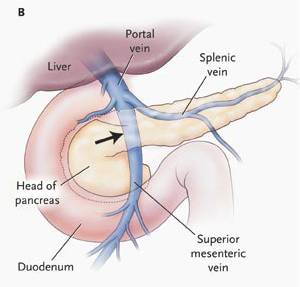
The pancreas is really two organs in one. Most of the pancreas produces enzymes that help with the digestion of food. This portion of the pancreas is called the "exocrine" pancreas, and it is thought to give rise to the most common type of pancreatic cancer called ductal adenocarcinoma (also commonly simply referred to as pancreatic cancer).
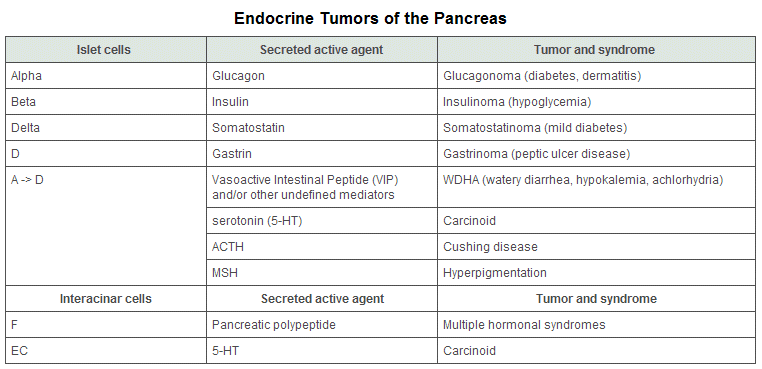
The pancreas also contains numerous islands of endocrine cells called the "islets of Langerhans." These islands contain small round cells (the endocrine cells) that produce the hormones that control blood sugar levels. Neoplasms (tumors) of the endocrine pancreas do occur, but are relatively rare, with an annual clinically recognized incidence approximating five cases per one million person-years. By contrast, pancreatic cancer (and again by this we mean ductal adenocarcinoma) strikes about 9 or 10 per 100,000 people each year. Neoplasms (tumors) of the endocrine pancreas are known by two broad names; "islet cell tumor," and "well-differentiated pancreatic endocrine neoplasm." The most important prognostic factor is whether or not the tumor can be removed surgically. Other significant prognostic for patients with an islet cell tumor / pancreatic endocrine neoplasm include the size of the tumor, the presence or absence of blood vessel invasion, the presence or absence of metastases to lymph nodes or other organs, The 5-year survival rate ranges between 50 and 70% in most series.