|
Therapeutic role of
lymph node resection in endometrioid corpus cancer. A study of
12,333 patients
John K. Chan, M. Cancer 2006;107;1823
The purpose of the current study was to
determine the potential therapeutic role of lymphadenectomy in women
with endometrioid corpus cancer.
METHODS.Demographic and clinicopathologic information were obtained
from the Surveillance, Epidemiology, and End Results Program between
1988-2001. Data were analyzed using Kaplan-Meier methods and Cox
proportional hazards regression.
RESULTS.In all, 12,333 women (median age, 64) underwent surgical
staging with lymph node assessment, including 9,009, 1,211, 1,223,
and 890 with Stage I-IV disease. Over the time intervals 1988-1992,
1993-1997, and 1998-2001, the percentage of patients undergoing
lymph node staging increased from 22.6%, 29.6%, to 40.9% (P < .001).
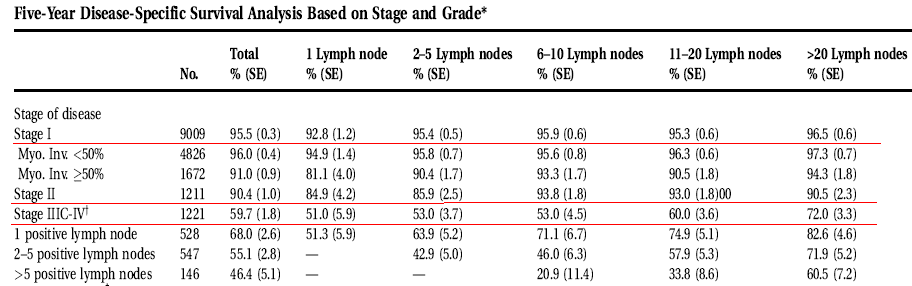
In the intermediate/high-risk patients (Stage IB, Grade 3; Stage IC
and II-IV, all grades), a
more extensive lymph node resection (1, 2-5, 6-10, 11-20, and >20)
was associated with improved 5-year disease-specific survivals
across all 5 groups at 75.3%, 81.5%, 84.1%, 85.3%, and 86.8%,
respectively (P < .001). For Stage IIIC-IV patients with nodal
disease, the extent of node resection significantly improved the
survival from 51.0%, 53.0%, 53.0%, 60.0%, to 72.0%, (P < .001).
However, no significant benefit of lymph node resection in low-risk
patients could be demonstrated (Stage IA, all grades; Stage IB,
Grades 1 and 2 disease; P = .23). In multivariate analysis, a more
extensive node resection remained a significant prognostic factor
for improved survival in intermediate/high-risk patients after
adjusting for other factors including age, year of diagnosis, stage,
grade, adjuvant radiotherapy, and the presence of positive nodes (P
< .001).
CONCLUSIONS.The findings of the current study suggest that the
extent of lymph node resection improves the survival of women with
intermediate/high-risk endometrioid uterine cancer. |