| Typical radiation doses (from GOG
#165 XRT + platinum or 5FU for IIB - IVA cervix cancer) uses pelvic dose of 45Gy + Point A dose of 40Gy and side wall boost
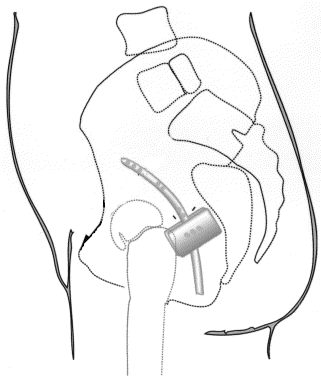
of 540-900cGy (180 X 3-5) The maximal dose to bladder is
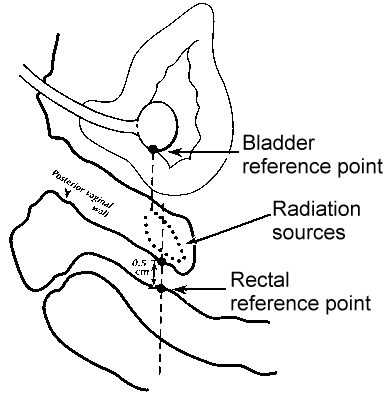
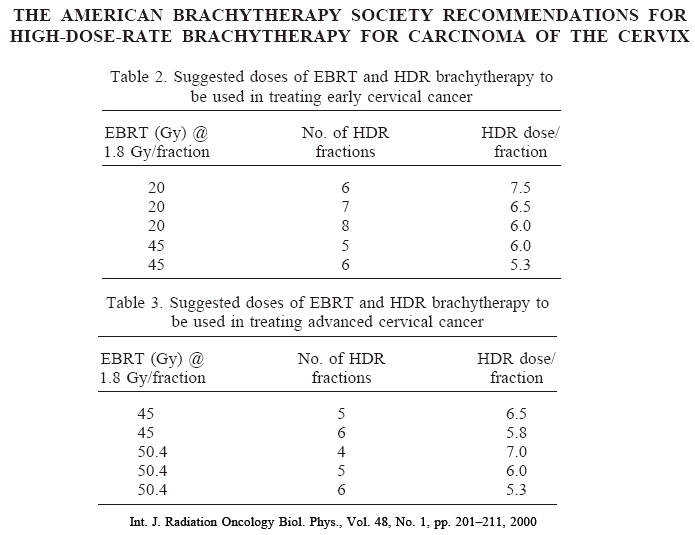
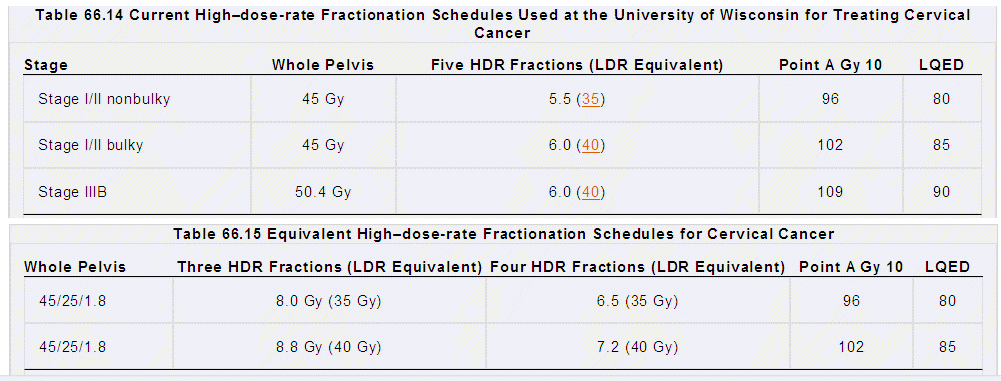
75Gy and rectum 70Gy. For HDR they use 600cGy X 5 (rectum < 4.1/Gy/fx or
68% PTA and bladder < 4.6Gy/fx or 77% Pt A). Note that many are now using HDR (high
dose rate brachytherapy machines as discussed in the endometrial section) rather
than more traditional LDR (low dose rate, i.e. using cesium or radium sources that may
take 48 - 72 hours to receive the treatment.). The dose fractionation for HDR is different
than LDR as noted below (from Petereit IJROBP 1999;45:1267.)
RTOG uses similar techniques and doses. In the RTOG C-0016 protocol for patients with + nodes (high pelvic or
para-aortic) they use pelvic/paraA node dose of 45 Gy (180X 25) the side wall dose is 60Gy
and point A dose of 85Gy combined with weekly cisplatin (40mg/M2) based on the rationale
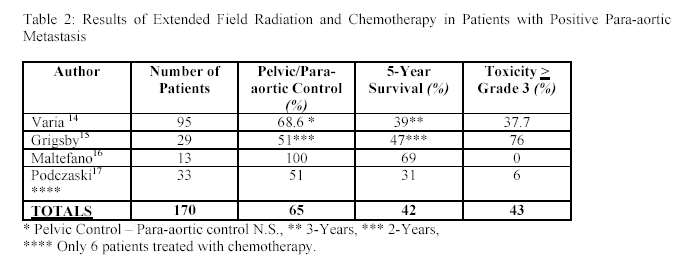
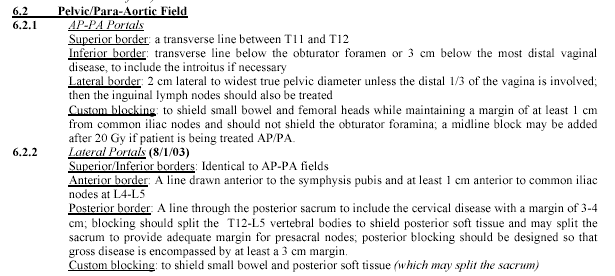
that even with positive para-aortic nodes many patients are cureable (see data) the radiation ports are
described and the maximum
safe doses defined. |