Stereotactic Radiosurgery for Single Brainstem Metastases: The Cleveland Clinic Experience
International Journal of Radiation Oncology * Biology * Physics/Volume 78, Issue 2 , Pages 409-414, 1 October 2010
To assess the imaging and clinical outcomes of patients with single brainstem metastases treated with stereotactic radiosurgery (SRS).
Materials and Methods
We retrospectively reviewed the
data from patients with single brainstem metastases treated with SRS.
Locoregional control and survival were calculated using the Kaplan-Meier
method. Prognostic factors were assessed using a Cox proportional
hazards model.
Results
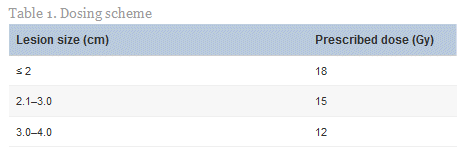
Between 1997 and 2007, 43 patients with single brainstem metastases were treated with SRS. The median age at treatment was 59 years, the median Karnofsky performance status was 80, and the median follow-up was 5.3 months. The median dose was 15 Gy (range, 9.6–24), and the median conformality and heterogeneity index was 1.7 and 1.9, respectively. The median survival was 5.8 months from the procedure date. Of the 33 patient with post-treatment imaging available, a complete radiographic response was achieved in 2 (4.7%), a partial response in 8 (18.6%), and stable disease in 23 (53.5%). The 1-year actuarial rate of local control, distant brain control, and overall survival was 85%, 38.3%, and 31.5%, respectively. Of the 43 patients, 8 (19%) died within 2 months of undergoing SRS, and 15 (36%) died within 3 months. On multivariate analysis, greater performance status (hazard ratio [HR], 0.95, p = .004), score index for radiosurgery (HR, 0.7; p = .004), graded prognostic assessment score (HR, 0.48; p = .003), and smaller tumor volume (HR, 1.23, p = .002) were associated with improved survival. No Grade 3 or 4 toxicities were observed.
Conclusion
The results of our study have shown
that SRS is a safe and effective local therapy for patients with
brainstem metastases.
