Cisplatin-based combined modality therapy
for anal carcinoma. A wider therapeutic index
Arthur Hung, M.D. The University of Texas, M. D.
Anderson Cancer Center Cancer 2003;97:1195-202
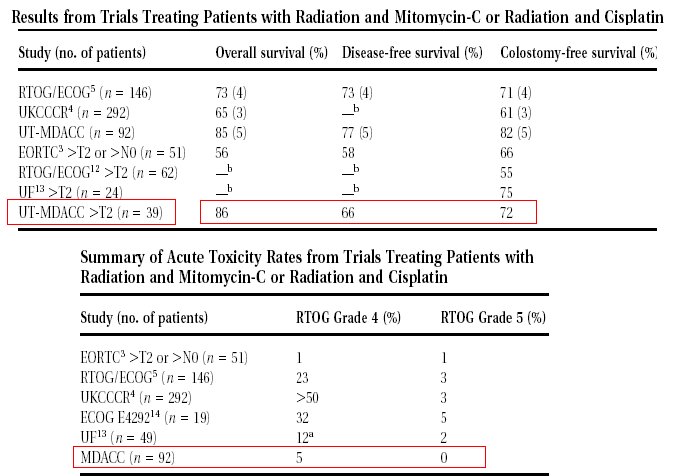
see data on results
and toxicity
| Definitive chemoradiation therapy is the standard of care for anal carcinoma. The
chemotherapy regimen comprising 5-fluorouracil (5-FU) and mitomycin-C is the most commonly
used among patients with anal carcinoma but causes well documented toxicities. In the
current study, the authors evaluated their experience in treating anal carcinoma with
combined modality therapy using cisplatin and 5-FU. |
METHODS |
| A retrospective analysis was performed of 92 patients with nonmetastatic squamous cell
carcinoma of the anus who were treated between 1989 and 1998. The primary
tumor and involved lymph nodes received a total dose of 55 grays (Gy) administered in more
than 30 daily fractions. Cisplatin (4 mg/m2/day) and 5-FU (250 mg/m2/day)
were given as a continuous infusion, 5 days each week during the entire radiation course.
Concurrent chemoradiation therapy was delivered over 6 weeks without a planned
treatment break. Our radiation technique delivered a total dose of 55 grays (Gy) in 30
fractions to the primary disease site and macroscopically involved lymph nodes. Elective
lymph node regions otherwise received 30.6 Gy. All patients were treated with anterior
and posterior fields for the initial 30.6 Gy at 1.8 Gy per fraction. The superior
border was located at the bottom of the sacroiliac joints, the inferior border was at
least 3 cm below the most inferior portion of the tumor or anal verge, and the lateral
borders covered the medial inguinal lymph nodes. After 17 fractions (30.6 Gy), a
resimulation was performed with patients in the prone position using an open tabletop
device.Patients were then treated using three fields (i.e., a right lateral, a left
lateral, and a posterior field). For the lateral fields, the superior and inferior borders
were unchanged, but the posterior border was placed behind the sacrum and the anterior
border was placed 1-2 cm behind the pubic symphysis. To complete the treatment in 6 weeks
and bring the total dose to 55 Gy, the final 2 fractions were delivered at 2.3 Gy and
treated only the macroscopic disease with a 2-3-cm margin. The goals of our field
arrangements were to deliver a high dose (55 Gy) to the macroscopic disease and a lower
dose (30.6 Gy) to potential microscopic disease while minimizing the volume of the small
bowel and genitalia irradiated.Kaplan-Meier methodology was used to determine local
control (LC), disease-free survival (DFS), and overall survival (OS). |
RESULTS |
| Ten patients had T1 or Tx, 43 had T2, 27 had T3, and 12 patients had T4 disease. There
were 21 male and 71 female patients. Sixty-five patients (71%) were lymph node negative.
With a median follow-up duration of 44 months, the actuarial 5-year OS rate was 85%, the
DFS rate was 77%, and the
colostomy-free survival rate
was 82%. Local recurrences occurred in 16 patients (17%). Distant
metastases (DM) occurred in eight patients (9%). Advanced T classification (> T2)
predicted lower LC and DFS rates. Advanced N classification (> N1) predicted worse DFS,
OS, and DM rates. Greater than 90% of patients completed treatment without significant
treatment interruption. Only five patients developed acute toxicities of Radiation Therapy
Oncology Group (RTOG) Grade 4 or higher and only three patients developed chronic
toxicities of RTOG Grade 4 or higher. |
CONCLUSIONS |
| Combined modality therapy with continuous infusion of cisplatin and 5-FU is a well
tolerated regimen that results in high rates of LC, OS, and sphincter preservation. These rates are comparable to the best results reported with
mitomycin-C and 5-FU. Without the normally severe toxicity, cisplatin-based therapy
results in a wider therapeutic index. |
|