Terror threats and attacks have had a
profound effect on our everyday lives. The recent arrests in England involving a plot to
bring potentially explosive liquids on board aircraft have led to tighter airport security
screening than ever before. (One of my patients —who thinks he’s funny—c
hides me by saying he gets a better physical prior to boarding a plane than he does in my
office!)
We know to leave behind most sharp metal objects and any other item that conceivably might
be used as a weapon. However, you may not be aware that after undergoing certain
diagnostic tests, you can activate airport screening triggers.
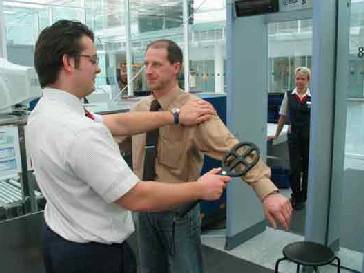
Recently, a man repeatedly set off the security alarms at a U.S. airport. When the usual
wands and patting down failed to reveal the source of the trouble, he was detained,
sniffed by dogs and strip-searched. He finally was released when he thought to disclose
the fact that, a few weeks earlier, he had been treated with radioactive iodine for his
overactive thyroid gland. |
 |
|